Log Loader Trailer for Managing Remote Woodlot Work
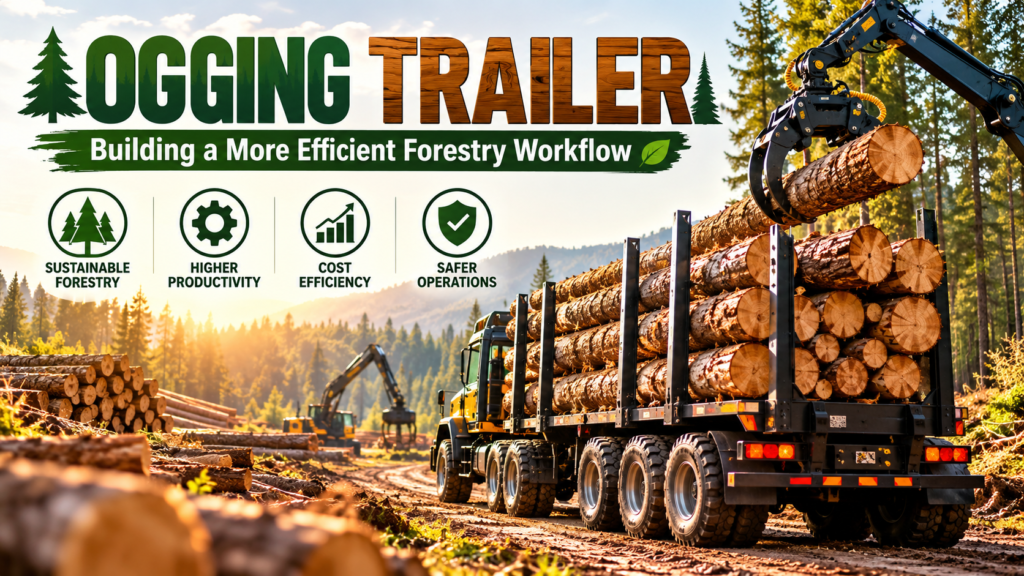
Working far from a prepared yard makes timber handling more complicated. A log loader trailer can help operators collect and transport logs in locations where separate loading machinery is difficult to position. For remote woodlots, mobility, self-sufficiency, careful route planning, and dependable equipment become especially important.
Why Remote Sites Need Different Planning
A problem that is minor near a workshop can become a major delay deep in a woodlot.
Operators may have limited access to tools, replacement equipment, or additional machinery. Every trip back to a central location consumes working time.
A log loader trailer can support a more self-contained timber-handling process by combining transportation with practical loading capability.
Plan Access Before Harvesting
Before cutting begins, consider how timber will leave the site.
Identify trails wide enough for the towing combination and locate suitable turning areas. Check overhead clearance and watch for steep grades or soft ground.
Planning around the log loader trailer before timber accumulates can prevent awkward collection situations later.
Establish Strategic Timber Piles
Rather than leaving logs scattered across a large area, create accessible collection points when practical.
This approach allows the trailer to stop at fewer locations and can make loading cycles more efficient.
Carry Loads Appropriate to the Terrain
Maximum capacity does not mean every load should be identical.
Terrain may require operators to adjust load size. Difficult slopes, soft surfaces, or restricted access can influence what is practical under current conditions.
A log loader trailer should always be loaded within applicable limits, with weight distributed appropriately.
Prepare for Changing Ground Conditions
Remote tracks can deteriorate quickly after rain or heavy traffic.
Inspect routes throughout the working period rather than assuming conditions remain unchanged. If an area becomes excessively soft or unstable, changing the route may be more efficient than repeatedly struggling through it.
Operators researching forestry equipment support and location information can factor these site-specific conditions into their equipment planning.
Reduce Avoidable Downtime
Routine preparation becomes particularly valuable in remote locations.
Before entering the woodlot, inspect tires, towing connections, structural components, hydraulic systems, and load restraints. Address questionable components while tools and resources remain readily available.
Make Loading Movements Deliberate
Speed comes from smooth repetition rather than rushed movements.
Position the log loader trailer carefully, identify the sequence of logs to be loaded, and avoid unnecessary repositioning.
Where timber varies significantly in size, consider load balance before lifting the first log.
Keep Safety Procedures Consistent
Remote work should not lead to relaxed safety practices.
Keep people clear of suspended timber and moving equipment. Ensure the trailer is positioned securely before operating loading mechanisms.
Communication becomes particularly important when two or more people are working around the log loader trailer.
Prepare for Communication Limitations
Some remote properties may have inconsistent communication coverage. Operators should consider how assistance would be contacted if an equipment problem or emergency occurred.
Planning ahead is a practical part of remote forestry work.
Review the Day’s Performance
After finishing, consider what slowed the operation.
Was the collection route inefficient? Were timber piles difficult to access? Did the trailer require frequent repositioning?
These observations can guide improvements for the next working session.
A log loader trailer becomes more productive when the surrounding workflow is continuously refined.
Conclusion
For remote forestry operations, a log loader trailer can provide valuable flexibility by bringing loading and transportation capability directly to the timber. Route planning, strategic collection points, terrain-aware loading, preventive inspection, and disciplined operation help operators make the most of that flexibility. When preparation begins before harvesting, even distant woodlot work can become considerably more organized and efficient.
About The Author